Wonderia Survival Guide
Post-2116 food pressure, hot springs, and expedition supplies
Wonderia Survival Guide — Food, Hunger, and Hot Springs
Hunger still matters in Wonderia Early Access—but v0.5.8.2116 changed the rules. Passive food drain over time was removed. Your Food bar no longer bleeds away while you stand in camp rearranging chests. Pressure now comes from combat, travel actions, and active play, which means expedition planning still matters even though idle AFK is far kinder. This guide explains the new pacing, how starting supplies and the hot spring fit, and how to graduate from scavenged snacks to a real farming-fishing-cooking economy.
Pair it with getting started if your camp is still unformed, and with farming once plots are online.
Wonderia is not a Roblox codes game—you will not find a redeemable hunger cheat. You solve food the sandbox way: loot smart, cook often, and match meal stacks to fight-heavy routes.
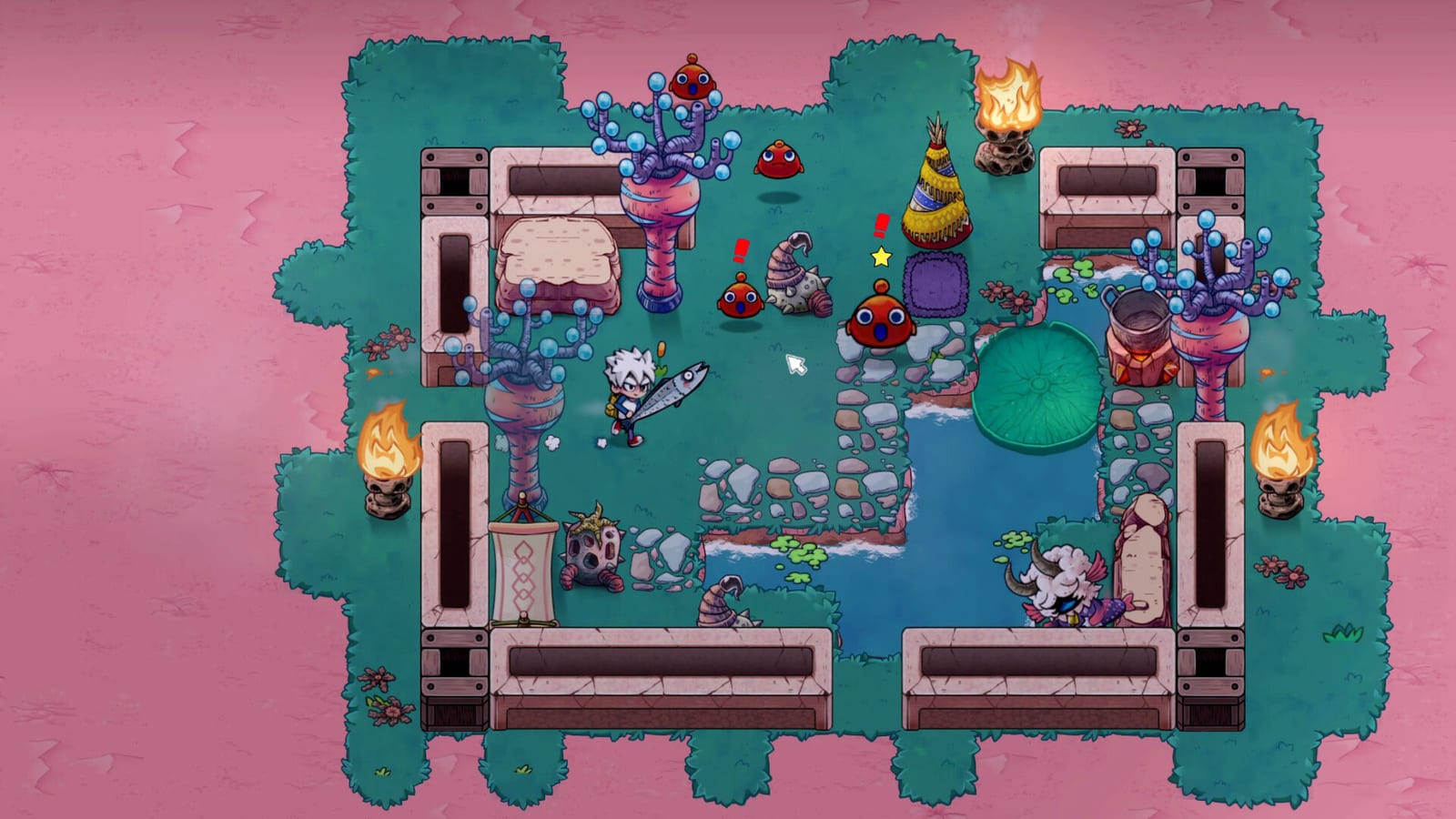
How hunger pressure feels after v0.5.8.2116
Before 2116: long aimless walks and idle time could empty the bar even when you were “just looking.”
After 2116: standing at base is safe for Food; getting into fights, heavy tool use, and action-dense exploration is what spends calories.
That is good news for builders and AFK drill watchers—especially with Hand-crank continuous mining restored—but it is not a free pass into temples. Boss nights, dense fauna packs, and panic kiting still demand meals. Treat every outing as a budget of fights accepted and distance walked under threat, not a wall-clock timer.
Early Access patches already softened the on-ramp: more Compressed Biscuits and Bandages in the starting chest, the same kit for multiplayer joiners after 2106, and a hot spring near the start that replenishes Food. Use those gifts deliberately.
Starting supplies: open the chest like it matters
On a new save, make the starting chest your first interact. Sort:
- Compressed Biscuits — emergency Food for combat-heavy loops; keep some on the hotbar.
- Bandages — stabilize after messy early fights so you can walk home and eat.
- Anything that crafts into tools — prioritize hoe, watering can, and fishing unlocks over decorative clutter.
If you join a friend’s world, confirm you received the joiner starting kit. Hosts should still point newcomers to the hot spring and kitchen. For lobby hygiene, see multiplayer tips.
The hot spring still earns its keep
Locate the hot spring near the start before you memorize every cute creature on the ridge. Mentally mark it as:
- A recovery stop after a failed combat circuit.
- A staging point before Stonefeather or temple attempts.
- A teaching tool for new co-op guests (“if Food is critical after a wipe, go here first”).
The hot spring does not replace farming. It exists so Early Access players can recover quickly when action pressure spikes. Once plots produce, your dependence should drop—but never forget its location after dungeon attempts or Stonefeather wipes.
Forage, then industrialize food
Phase one is opportunistic foraging: berries, early recipes when available, easy critter drops, and whatever the first biome hands you without a boss fight. Cook when a recipe stretches value; raw eating is a last resort. Phase two is industrialization:
- Unlock and use the hoe and watering can.
- Plant seeds collected on short trips.
- Add fishing for protein variety.
- Cook batches so expeditions leave with stacked meals, not single snacks.
Deep detail lives in the Wonderia farming guide. Survival’s job is to tell you when to switch phases: if you are still biscuit-dependent after your first successful harvest window, stop exploring and finish the farm loop.
Expedition rules that prevent soft-locks
Carry a turnaround meal. If a wipe or long fight forces you to eat it to reach camp, shrink the next route.
Do not enter temples on empty. Puzzle dungeons punish confusion; low Food multiplies mistakes after mistakes. Prep with the dungeons guide.
Bandage outside the spike. Heal after the fight, not during a greed swing, unless you will die otherwise.
Morph for safer disengages when available. Some creature forms help you leave bad pulls—see transformation.
Copper and drill sessions need fewer panic snacks than before—but still pack some. AFK continuous mining is friendlier post-2116; the walk and fauna on the way are not. Read copper, Hand-crank Drill, and Stonefeather.
Vehicles and teleports change budgets later. Until then, assume contested walking distance is the real cost. Later, vehicles and teleport points reduce dead travel.
Camp layout for survival efficiency
A survival-friendly camp puts:
- Chest and trash sort near the door.
- Kitchen beside storage.
- Farm plots in a watered cluster you can complete in one lap.
- A visible path toward the hot spring.
Use base building for placement ideas, but optimize for calorie logistics first. Track staples with the checklist and resources tools. Merchant Rohen now sells biscuit/bandage packs of five at better per-unit prices if the pantry is dry.
Combat, biomes, and food risk
Harder biomes and denser enemy packs increase both damage and action pressure on Food. Before you push a new region, check biomes and update your meal stack size. Gear upgrades from equipment and priorities from the early-game tier list matter partly because shorter fights mean fewer meals spent per loot pile.
Boss nights deserve special rules. Stonefeather attempts should start from full Food, with biscuits reserved for the walk back after a wipe—not for the walk in. Cook a batch the evening before.
Multiplayer survival etiquette
In co-op, food becomes shared infrastructure. Assign a “camp cook” even in small groups. Call out when the hot spring is your recovery plan. Guests should not empty the biscuit chest without restocking from the farm. Hosts should keep updates in mind after patches that change Food systems or starting kits.
Recovery playbook when you are already failing
Bathtubs after v0.5.8.2121 (not a travel food cheat)
Craftable Bandages after v0.5.8.2135
You no longer need every chip-damage scrape to be a Rohen shopping trip. 2135 lets you craft Bandages at the Crafting Table with Cranberries + Fiber—experimental healing before the pharmacist path.
Pair farmed cranberries with foraged fiber before dungeon nights. Rohen packs remain useful for biscuits and rush restocks (Rohen). Details: patch 2135.
Patch 2116 removed passive hunger; some players started carrying bathtubs on expeditions to bypass meal planning. 2121 nerfed that loop:
- Lower Food recovery rate from portable bathtubs
- Higher carry weight so they are less attractive as walking hot springs
Hot springs at fixed locations and cooked meals from farming remain the intended mid-game food loop. Do not delete your kitchen because idle drain is gone—action-heavy routes still spend Food, and bathtubs are no longer a free lunch on legs.
If your group relied on bathtub caravans, replan with biscuit packs from Rohen and batch cooking before temples (dungeons). Full patch context: v0.5.8.2121.
- Stop picking new fights immediately.
- Hot spring if you can reach it safely.
- Eat biscuits; bandage if repeated damage is bleeding the run.
- Fish or harvest anything adjacent to camp.
- Cook a small batch before re-entering combat routes.
- Only then resume copper, temples, or sightseeing.
If the run still feels brutal, re-read getting started and shrink your combat radius for another hour. Wonderia’s sandbox fantasy works best when survival is boringly solved. Once Food is a solved system, the rest of the wiki—guides hub, crafting, map, review—becomes optional depth instead of emergency reading.
Frequently Asked Questions
Quick answers to the most common Wonderia questions.
Does food still drain over time in Wonderia after v0.5.8.2116?
No. Passive food drain was removed in v0.5.8.2116. Food pressure now comes mainly from combat and actions, not idle waiting.
What is the hot spring for in Wonderia?
The early hot spring near the starting area replenishes Food after rough fights or failed loops. It remains useful post-2116 even though idle drain is gone.
What are Compressed Biscuits used for?
They are emergency Food for combat-heavy expeditions and wipes. Keep some on your hotbar, then transition to cooked farm and fish meals for daily loops.
Why do I still run out of food in Wonderia?
Your routes are probably too fight-dense for your meal stack. Shorten combat circuits, use the hot spring, cook batches, and unlock farming before deep biome pushes.
Do multiplayer joiners get starting survival items?
After the 2106 hotfix, joiners receive improved starting Compressed Biscuits and Bandages. Still show them the hot spring and kitchen on arrival.
When should farming replace scavenging in Wonderia?
As soon as you can plant, water, and harvest a first crop cycle. Biscuits should become dungeon insurance, not your only diet.
Can I still carry bathtubs for food on trips after patch 2121?
2121 reduced bathtub Food recovery and increased carry weight specifically to stop that travel meta. Use hot springs, cooking, and Rohen packs instead.